Choosing the right ceiling lighting options can completely transform how your home looks and feels.
Whether you’re renovating your kitchen, finishing a basement, or updating your living spaces, the decision between recessed vs track lighting is one you’ll likely face.
Both options offer unique advantages, but understanding their differences will help you make the best choice for your Hamilton home!
Related: Acrylic vs Fiberglass Bathtub: How to Choose the Best Option for Your Home
What Is Recessed Lighting and How Does It Work?
Design and Installation Basics
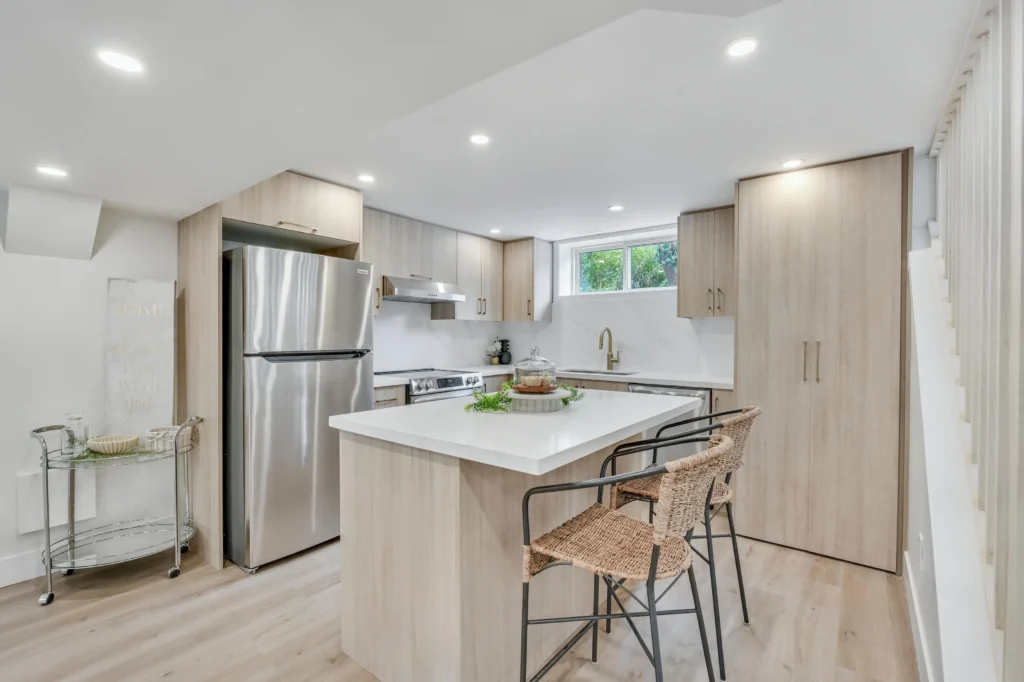
Recessed lighting, often called “can lights” or “pot lights,” sits flush with your ceiling. The fixture is installed above the ceiling line, with only the trim and bulb visible from below. This creates a clean, streamlined appearance that many homeowners love.
Installation requires cutting holes in your ceiling and running electrical wiring to each fixture location. If you have access to the space above your ceiling, installation is relatively straightforward. However, finished ceilings or limited attic access can make the process more complex.
Common Applications in Modern Homes
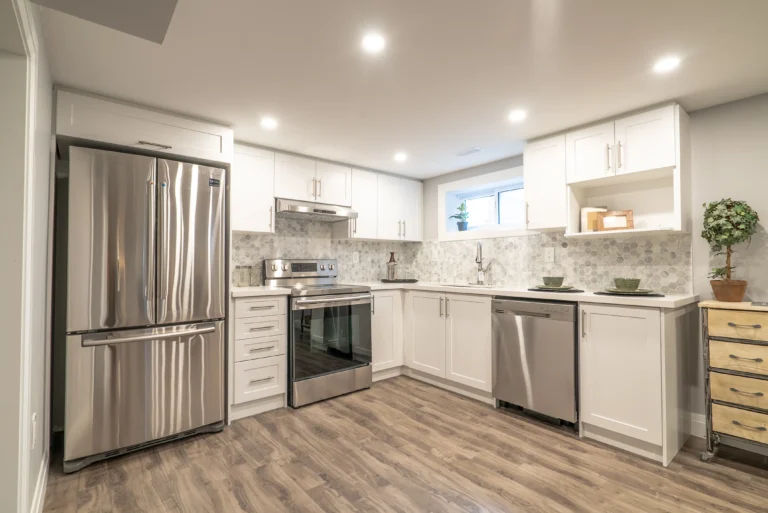
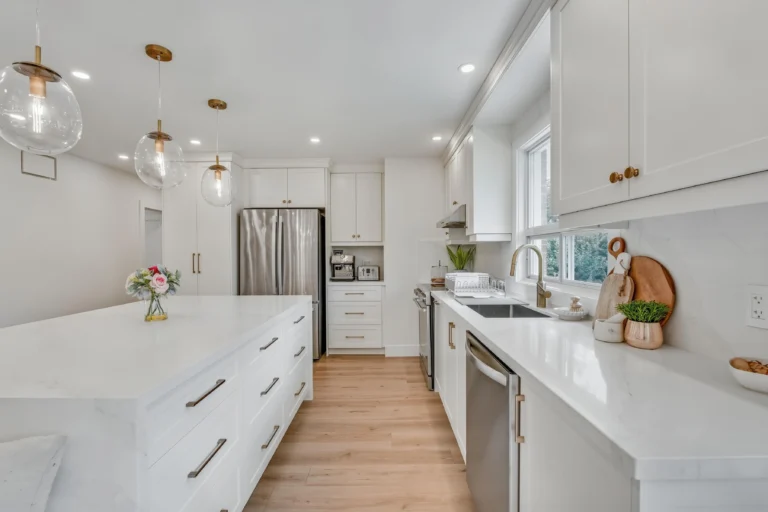
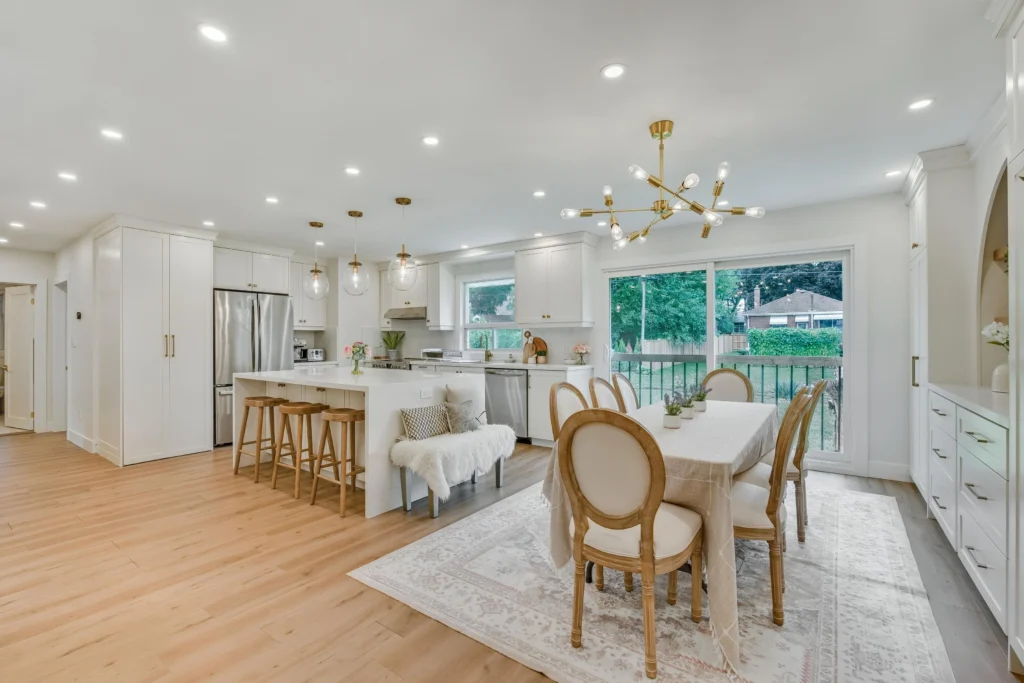
Recessed lighting works beautifully in kitchens, where it provides even illumination across countertops and workspaces. Many homeowners also use it in bathrooms, hallways, and living rooms. The fixtures blend seamlessly into the ceiling, making them ideal for spaces where you want light without visible hardware.
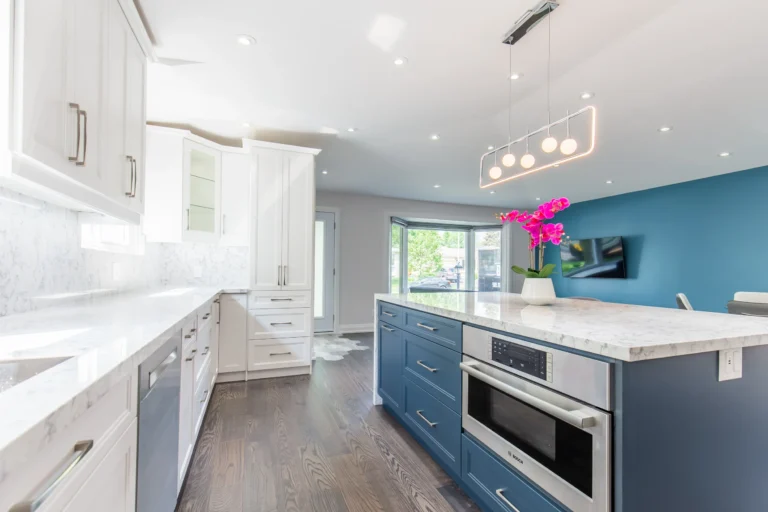
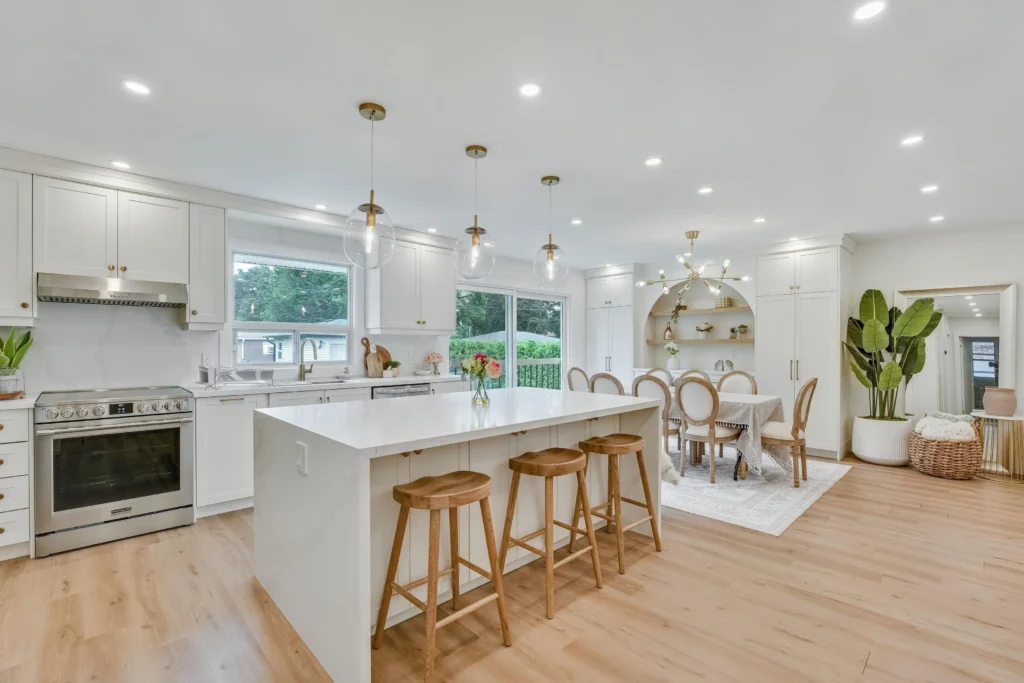
These lights excel at general ambient lighting and can be strategically placed to highlight specific areas. You’ll often see them used to illuminate kitchen islands, create reading nooks, or wash walls with soft light.
Energy Efficiency and Bulb Options
Modern recessed lights accept LED bulbs, which consume far less energy than traditional incandescent options.
You can choose from various color temperatures, from warm whites that create cozy atmospheres to cool whites perfect for task lighting.
Dimmer-compatible fixtures give you even more control over your lighting mood and energy consumption.
What Is Track Lighting and How Does It Work?
Design and Installation Basics
Track lighting features a visible track mounted to your ceiling, with multiple light fixtures attached along its length. The track delivers electricity to each fixture, allowing you to position lights exactly where you need them. Unlike recessed lighting vs track lighting installations, track systems sit below your ceiling rather than inside it.
Installation is generally simpler than recessed lighting because you’re not cutting into your ceiling. The track mounts directly to the ceiling surface, and you connect it to an existing electrical box. This makes track lighting an excellent option for homes where ceiling access is difficult.
Flexibility and Adjustability Features
One of the biggest advantages of track lighting is flexibility. You can slide fixtures along the track to change their position, and most fixtures swivel to direct light wherever you need it. This adjustability makes track lighting perfect for spaces that serve multiple purposes or where your lighting needs might change over time.
Need to highlight a new piece of artwork? Simply adjust an existing fixture. Rearranging your furniture layout? Move the lights to match your new configuration.
Style Variations Available
Track lighting comes in numerous styles, from industrial metal finishes to sleek modern designs. You can choose straight tracks, curved tracks, or even flexible tracks that bend around architectural features. The fixtures themselves range from simple spotlights to decorative pendants, giving you plenty of modern lighting ideas to explore.
Some systems allow you to mix different fixture styles on the same track, creating a custom lighting solution.
Key Differences Between Recessed Lighting vs Track Lighting
Visual Impact and Aesthetic Appeal
The recessed vs track lighting debate often comes down to aesthetics. Recessed lighting virtually disappears into your ceiling, creating a minimalist look that doesn’t compete with your décor. This makes it ideal for contemporary and traditional homes alike.
Track lighting, by contrast, makes a statement. The visible track and fixtures become part of your room’s design. This works beautifully in modern, industrial, or eclectic spaces where you want your lighting to be a design feature rather than blend into the background.
Consider your home’s overall style when making this choice. Recessed lighting benefits include a timeless appearance that won’t look dated in ten years. Track lighting offers more personality and can serve as an architectural element in its own right.
Installation Requirements and Complexity
Recessed lighting requires more invasive installation. You’ll need to cut holes in your ceiling, which means dealing with drywall dust and potential patching if you ever remove the fixtures. Access to the space above your ceiling is essential, and you may need to work around insulation, wiring, or structural elements.
Track lighting mounts to your ceiling surface with minimal disruption. There’s no cutting required, and installation typically takes less time. This makes it a more DIY-friendly option, though professional installation ensures proper electrical connections and code compliance.
The installation difference between recessed vs track lighting can significantly impact your renovation timeline and budget.
Cost Comparison
Material costs for recessed vs track lighting are often comparable, but installation expenses can differ significantly. Recessed lighting installation is more labor-intensive, especially if ceiling access is limited or if you’re installing multiple fixtures across a large area. You may also need additional insulation-rated fixtures if your lights will be in contact with attic insulation.
Track lighting installation is typically less expensive because it’s less time-consuming and doesn’t require ceiling modifications. However, high-end track systems with designer fixtures can cost more than basic recessed lighting setups. Recessed lighting installation costs can range significantly depending on your home’s specific conditions.
When considering the home lighting comparison, factor in both immediate costs and long-term value. Both options can add appeal to your home, though in different ways.
Get Expert Guidance on Your Hamilton Home Lighting Project with Birk Homes
Deciding between recessed vs track lighting doesn’t have to be overwhelming. At Birk Homes, we help Hamilton area families make smart renovation decisions that enhance their homes while fitting their lifestyle and budget.
Our full-service home renovations team understands that lighting is more than just function—it’s about creating the right atmosphere for your family. We’ll walk you through your ceiling lighting options, discuss how each choice works with your home’s architecture, and help you select solutions that you’ll love for years to come. Ready to brighten up your space? Request a quote today, and let’s discuss how we can bring your Hamilton home renovation vision to life!