
Choosing the right countertop material can make or break your kitchen renovation. When homeowners in Hamilton start planning their kitchen upgrades, one of the biggest decisions they face is granite vs. quartz countertops.
Both materials offer beautiful, durable surfaces that can transform your space, but they have distinct differences that might make one a better fit for your home than the other.
Understanding these differences will help you make a confident decision that matches your lifestyle, budget, and design goals.
Related: What Are ADUs in Real Estate?
What Makes Granite and Quartz Different?
Natural Stone vs Engineered Countertops
The fundamental difference between granite vs. quartz countertops starts with how they’re created. Granite is a natural stone that’s quarried directly from the earth, meaning each slab is completely unique.
Quartz countertops, on the other hand, are engineered products made from about 90-95% ground natural quartz crystals mixed with resins and pigments.
This distinction affects everything from appearance to maintenance requirements.
How Each Material Is Made
Granite forms deep within the earth over millions of years under extreme heat and pressure. Once quarried, the stone is cut into slabs, polished, and prepared for installation. The natural formation process means no two granite slabs are identical.
Quartz countertops are manufactured in factories where crushed quartz is combined with polymer resins under intense pressure and heat. This manufacturing process allows for greater consistency and control over the final appearance, and it creates an extremely hard, non-porous surface.
Visual Appearance and Pattern Variations
Granite showcases the raw beauty of nature with unique veining, color variations, and mineral deposits in every slab. You’ll find dramatic movement and organic patterns that can’t be replicated. This uniqueness is one of granite’s most appealing qualities for homeowners who want a one-of-a-kind kitchen.
Quartz offers more predictable patterns and colors since it’s manufactured. You can choose from solid colors, subtle patterns, or designs that mimic natural stone. This consistency makes it easier to match samples to the final product.
Comparing Durability of Granite Compared to Quartz
Heat Resistance
When considering granite vs. quartz countertops, heat tolerance is an important factor. Granite naturally withstands high temperatures exceptionally well. You can place hot pots and pans directly on granite without causing damage, though using trivets is still recommended to prevent potential thermal shock.
Quartz is heat-resistant but not heatproof. The resin binders can be damaged by excessive heat, potentially causing discoloration or cracking. Always use hot pads or trivets with quartz countertops.
Scratch and Chip Resistance
Both materials are highly resistant to scratches from everyday use. Granite ranks high on the Mohs hardness scale, making it difficult to scratch with normal kitchen activities. However, the edges can chip if struck with heavy objects.
Quartz is slightly more flexible due to its resin content, which makes it somewhat less prone to chipping. Both materials will resist scratches from knives, though cutting boards are always recommended to protect both your countertops and your knives.
Long-Term Wear and Tear
The durability of granite compared to quartz over many years is excellent for both options. Granite can last a lifetime with proper care and can even be refinished if needed. Quartz is engineered for longevity and maintains its appearance with minimal effort.
Both materials hold up well in busy family kitchens where countertops see daily use.
Quartz vs Granite Price Comparison
Material Costs
When looking at granite vs. quartz countertops from a budget perspective, both fall into similar price ranges, though there’s significant variation. Granite typically costs between $40 to $200 per square foot depending on the rarity and origin of the stone. Common granite colors are more affordable, while exotic varieties command premium prices.
Quartz generally ranges from $50 to $150 per square foot. The price depends on the brand, color complexity, and edge detail.
Installation Expenses
Installation costs are comparable for both materials, typically running $30 to $100 per square foot. Both require professional installation due to their weight and the precision needed for cutting and fitting. Granite may require slightly more expertise since each slab must be carefully measured and templated to work with its unique patterns.
Long-Term Value
Both granite and quartz add value to your home. Kitchen renovations with quality countertops provide strong returns on investment. Granite has traditionally been viewed as a luxury material, while quartz has gained popularity and prestige in recent years.
Either choice will appeal to future buyers if you decide to sell your home.
Maintenance Requirements for Each Material
Daily Cleaning Needs
Daily maintenance for granite vs. quartz countertops differs slightly. Both clean easily with mild soap and water. Avoid harsh chemicals, abrasive cleaners, or acidic substances like vinegar or lemon juice on either surface, as these can cause damage over time.
Quartz is particularly low-maintenance for daily cleaning since its non-porous surface doesn’t harbor bacteria.
Sealing and Special Care
Here’s where granite and quartz differences become most apparent. Granite is porous and requires sealing every one to two years to prevent staining. The sealing process is simple and can be done by homeowners, but it’s an ongoing requirement.
Quartz never needs sealing because its engineered surface is naturally non-porous. This makes it an excellent choice for busy households that want minimal maintenance.
Stain Resistance
Properly sealed granite resists stains well, but unsealed or worn granite can absorb liquids like wine, oil, or coffee. Quartz’s non-porous surface makes it virtually stain-proof, though some manufacturers recommend avoiding prolonged contact with certain substances.
For families with young children or those who do a lot of cooking, this can be an important consideration.
Making the Right Choice: Granite or Quartz Which Is Better?

Best Uses for Granite Countertops
Granite excels in kitchens where natural beauty and heat resistance are priorities. It’s ideal for homeowners who love the unique character of natural stone and don’t mind periodic sealing. Granite works beautifully in traditional, rustic, or transitional kitchen designs.
If you frequently cook with hot pots and pans, granite’s natural heat resistance offers peace of mind.
Best Uses for Quartz Countertops
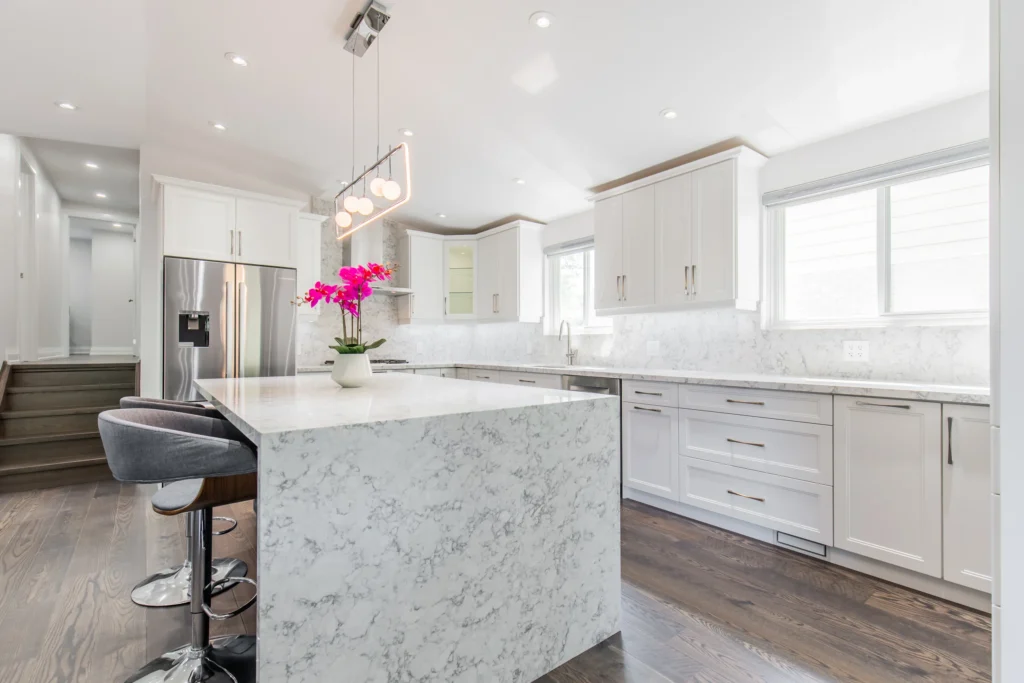
Quartz shines in modern, contemporary kitchens where consistency and low maintenance matter most. It’s perfect for busy families who want beautiful countertops without ongoing sealing requirements. The wide range of colors and patterns makes quartz adaptable to virtually any design style.
Homes with young children often benefit from quartz’s non-porous, bacteria-resistant surface.
Lifestyle Considerations
When deciding between granite vs. quartz countertops, think about your daily life. Do you have time for periodic maintenance, or would you prefer a set-it-and-forget-it surface? Do you value the unique patterns of natural stone, or do you prefer the uniformity of engineered materials?
Consider how much cooking you do, whether you have children, and what design aesthetic appeals to you. There’s no universally “better” choice—only the right choice for your specific situation.
Transform Your Kitchen with Birk Homes
Choosing between granite vs. quartz countertops is just one decision in your kitchen renovation journey. At Birk Homes, we specialize in helping Hamilton-area families create beautiful, functional kitchens that add lasting value to their homes.
Our team has extensive experience with both granite and quartz installations, and we can guide you through every step of the selection process. We’ll help you understand your options, work within your budget, and create a kitchen that serves your family for years to come.
Ready to start planning your kitchen renovation? Request a quote today and let’s discuss which countertop material is right for your home. Call us to schedule your consultation and take the first step toward the kitchen you’ve always wanted.